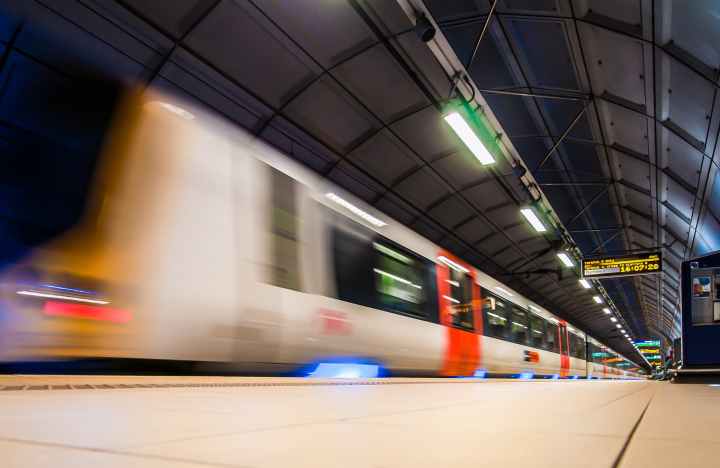
In 2010 Blair’s Transport Secretary, Lord Adonis, announced the creation of a high-speed rail network, which went on to be labelled High Speed 2 (HS2). This route would go from London to Birmingham, and later being extended in a Y shape to Liverpool and Manchester, and then Leeds and Sheffield, eventually leading to Scotland. This project was continued by the Cameron government and it still under construction today. Whilst HS2 has created jobs, do these jobs justify the effects of HS2 on our nation? This project has become a drain on public money and will fail to achieve all of its aims. But what have these aims been?
At the launch of the project, the clue was in the name. Faster trains would bring a better experience for commuters. So how fast are these trains going to be? Will we even sit down before we reach London? Yes, for quite a while actually. The London to Birmingham service will take 49 minutes rather than the current 81 minute journey time. Whilst this is somewhat impressive, journey time has never been the major issue among rail travellers. Regular commuters are much more concerned with their trains running consistently without cancellation and overcrowding. Saving 32 minutes means nothing when you’re still stuck in Birmingham because your train never came.
Another supposed aim of HS2 is to connect the North to the South, bridging the divide. HS2 will connect Manchester, Liverpool, Leeds and Sheffield, as well as several other locations, to London. Therefore people will finally be able to escape London and see the North, bringing prosperity to the former heartlands of the Industrial Revolution. Except, this isn’t the case. The North-South divide never emerged because people couldn’t get out of London, it came as a result of their being no real reason to, thanks to the London-centric Britain that has been fostered by successive governments. If the current Prime Minister was born any further South she’d be French and her predecessor was born in London. Investment in London means that people stay there. Londoners get over £400 more spending on transport than the North per capita. Northern cities are in decline, with Osbourne’s Northern Powerhouse being little more than a vanity project following the Tories collectively remembering that Manchester exists.
HS2 is also forcing people out of their homes, as they are granted ‘Compulsory Purchase Orders’, meaning they have to move as HS2 is due to run right through their homes. A new housing estate in South Yorkshire was told in 2016 that their land will be required for HS2, a service that they may never use, for the ”greater public good.”But surely they will see the benefit in more rail connections? No, because these people live in rural areas that are being torn apart by HS2 for the benefit of big cities.
So, how much of burden is HS2 on the economy? A huge one. The initial budget was around £30bn, not exactly a small project. In 2019 its budget is almost double that at £55.7bn. The UK has had a fragile economy since the financial crisis at the end the last decade which meant that the Conservative-Liberal Democrat Coalition Government was able to pass harsh austerity measures which had an enormous impact on Britain. As well as this, the UK will leave the European Union which is sure to bring about economic uncertainty in the short-term, medium-term and potentially the long-term. So how on Earth has the government been able to spend almost £60bn of public funds whilst simultaneously denying the existence of a ‘magic money tree’, underfunding the NHS and reducing the welfare state?
The money going into HS2 should be spent on the improvement of regional rail networks to avoid cancellations and poor quality rail services. This would happen if the North-South divide really was the cause behind HS2, with the 5 worst-performing rail services in 2018 all servicing the North. HS2 will bring more people to London, leaving the North behind to marvel at our capital whilst their communities are broken down, their high streets are ruined and their council budgets are cut.
Phase 1 of HS2 is due to be completed in 2026 (London-Birmingham). Let’s pull the plug on HS2 before we let it continue to spiral. One of the key issues with HS2 is the lack of public awareness that this drain on our economy has created. People engage in much more exciting issues like Brexit and ideological debates, whilst transport is seen as dull. And yes, it is dull. But that doesn’t mean that we don’t have a duty to engage with it. We need to understand the effect that HS2 is having and hold the government to account. HS2 has failed, and so have our politicians in failing to see this catastrophe happen.
Sources: The Guardian, I News, The Spectator, The Telegraph, Yorkshire Post, Gov.UK, BBC News
 What's Going On?